
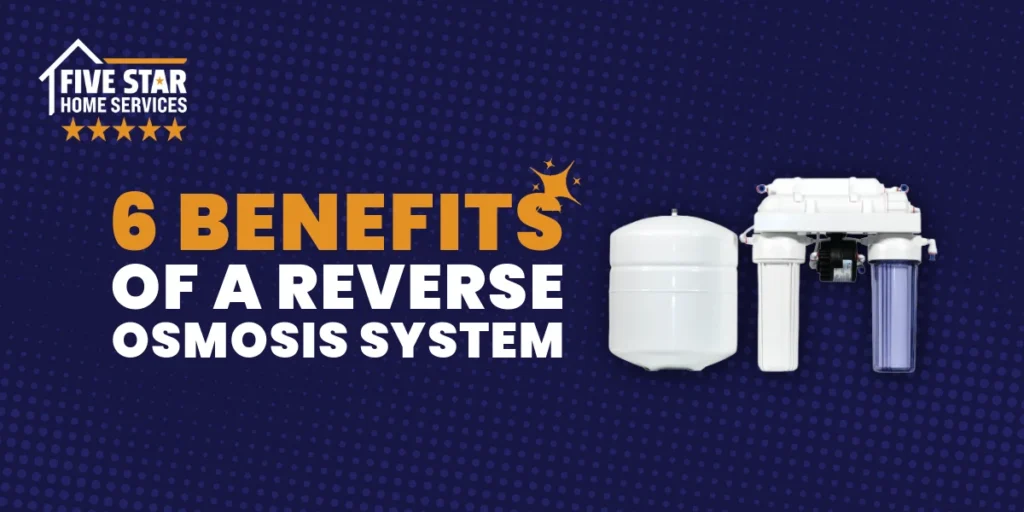
A reverse osmosis system removes chlorine, sulfur and other causes of bad taste and odor. It improves cooking and drinks, filters harmful contaminants like lead, arsenic and PFAS, and requires minimal maintenance. By cutting bottled water use, it saves money and reduces plastic waste. For many Ohio homes, it’s a simple way to get cleaner, safer water every day.
There are multiple benefits of a reverse osmosis system. These are: the elimination of unwanted taste and odor, cooking enhancement, and the removal of additives and impurities. On top of that, RO systems are easy-to-use, economical, and eco-friendly. Sounds like a win all around, right?
So, if you’re troubled by the strange odor of your tap water, it tastes funny, or perhaps you have found yourself constantly buying bottled to make up for your water quality issues, you should consider installing a whole house reverse osmosis system! In today’s age, an ever-increasing number of homeowners are opting for reverse osmosis (RO) systems to conveniently and affordably enhance their drinking water quality. Let’s look at some of the awesome benefits of a reverse osmosis system to understand why it’s becoming such a popular option in many Ohioan homes.

Reverse Osmosis System Benefits
Whole house reverse osmosis system are a great water treatment solution because they offer homeowners a simple, effective way to enjoy cleaner, safer water every day. Below, we’ll explore the top benefits that make reverse osmosis a smart choice for your home.
1. How Does a Reverse Osmosis System Remove Bad Taste and Odor from Water?
Pure water, untouched by impurities, is tasteless and odorless. If water has a “flavor,” it is because of the contaminants dissolved in it. If your home’s water is unpleasant in taste or smell, there’s a high chance you’ll find RO-filtered water preferable. A significant shift in water consumption is often observed in families after the installation of RO systems.
2. How Can RO Water Improve Your Cooking?
Cooking with bottled water isn’t exactly practical, given the inconvenience and cost. If you’re looking for uncontaminated water that enhances the taste of your food and gives you peace of mind, an RO system might just be the way to go.
Additionally, when cooking with unfiltered water, the presence of minerals, sulfur, or chlorine may negatively affect your meals’ taste, texture, and appearance. Whole house reverse osmosis systems remove impurities, allowing you to cook without hassle and leading to tastier meals. It’s ideal for dishes that require water for cooking, like pasta, rice, and dried beans. Plus, it’s great for brewing exquisite coffee and tea.

3. What Contaminants Does a Reverse Osmosis System Remove?
Adding a layer of filtration and protection for your city’s water supply is never a bad idea. A whole house reverse osmosis system guarantees that contaminants like lead, chlorine, fluoride, and others are eliminated. If you have a water softener and are worried about additional sodium in your water, an RO system can take care of that, too.
According to the Environmental Protection Agency an RO system can successfully filter the following:
- Lead
- Arsenic
- PFAs
- Bacteria
- Viruses
- Volatile Organic Compounds (VOCs)
For effective reduction of these contaminants, you should always opt for a certified RO filtration system explicitly tested and proven to remove these potentially harmful elements.
4. How Easy Is It to Use and Maintain an RO System?
Common water filters, like pitcher-style filters, can be inconvenient because of their slow filtration speed, the space they occupy, and the regular need for filter replacement. Despite their cost, faucet-mount filters and fridge filters also need frequent replacement.
On the contrary, RO filters only require replacement once or twice annually (every 6-12 months), providing a faster and sufficient water supply for most households and leading to a more convenient water filtration solution.
5. Can a Reverse Osmosis System Save You Money?
Keep in mind that investing in a reverse osmosis system can save you the ongoing expense of buying bottled water or paying for water jug delivery. According to Beverage Marketing Corporation, the average wholesale price for bottled water in 2020 was $1.17 per gallon. While that might not seem high at first, bear in mind that daily water usage adds up quickly, especially for families. By installing a whole house reverse osmosis system, you can enjoy pure, great-tasting water straight from your tap for just a fraction of the cost, helping you save money over time while skipping the hassle of constant refills.
6. How Is an RO System Better for the Environment?
Another great benefit of using a reverse osmosis system is the eco-friendly aspect. While some reverse osmosis systems produce a small amount of wastewater when flushing out contaminants, installing one in your home can still make a big difference for the environment. By reducing or even eliminating your usage of bottled water, you’ll help to cut down on the millions of plastic bottles sold every day. So, by making the switch to an RO system, you are not only making the change for your family’s health but also creating a positive impact on the planet.
Why Choose a Reverse Osmosis System
When it comes to your family’s drinking water, peace of mind matters. A reverse osmosis system will give you just that by removing the impurities you can’t see. The impurities include but are not limited to: chlorine, lead, and dissolved minerals, so every glass tastes fresh and clean. Beyond better taste, RO water protects your appliances from scale buildup, saves you money on bottled water, and keeps your cooking, coffee, and ice at their best. It’s a simple, low-maintenance way to enjoy safer, healthier water every day.
Why Your Ohio Home May Benefit Most from a Reverse Osmosis System
Ohio homeowners know that water quality can vary from city to city—and even from street to street. Many neighborhoods face hard water, high chlorine levels, or traces of agricultural runoff that can affect taste, smell, and overall safety. If you live in Ohio, a water treatment system may just be the right solution for you.
Reverse osmosis systems provide a reliable solution by filtering out these unwanted contaminants and minerals right at the tap. Whether your water comes from a municipal supply or a private well in Ohio, RO filtration ensures every glass is fresh, clean, and worry-free—giving your family better water and your home the five-star care it deserves.
What Should You Do Next if You’re Interested in Getting a Reverse Osmosis System?
- First, you can read up more about water quality by checking out our Water Quality Buying Guide here. It has everything you need to know before diving head-first into your water quality journey.
- Next, schedule your free water quality test with Five Star. We’ll come out at a time that works for you, test your water on the spot, and then when the results are ready, we’ll walk you through a few simple options to improve your home’s water quality.
- It’s as easy as picking up the phone or booking online. Our team will guide you step by step, making the process of getting cleaner, healthier water in your home simple, pleasant, and stress-free—because you deserve five-star care.

A reverse osmosis system is one of the simplest, straight-to-the-point ways to enjoy cleaner, safer water in your home. With six major benefits: eliminating unpleasant taste and odor, enhancing your cooking, removing harmful impurities, providing easy-to-use filtration, saving you money, and helping the environment….it’s no wonder more Ohio homeowners are making the switch.
Are you ready to experience the benefits of whole house reverse osmosis system for yourself? If so, our dedicated team at Five Star Home Services is ready to guide you through the process. Feel free to call us at (833) 405-8009 or contact us by scheduling an appointment!
You can also read more about reverse osmosis systems specifically here.
FAQS
- What does a reverse osmosis system remove from Ohio tap water?
A whole reverse osmosis system can remove common contaminants like chlorine, lead, arsenic, PFAS (aka forever chemicals), and even some bacteria and viruses. RO filtration is especially helpful for Ohio homes dealing with hard water or water that tastes or smells unpleasant. The result? Every glass of water is fresh, clean, and worry-free.
- Is a reverse osmosis system worth it for my home?
Yes! Reverse osmosis systems provide cleaner, better-tasting water for drinking and cooking while saving you money on bottled water. They’re low-maintenance, eco-friendly, and can even protect your appliances by reducing scale buildup. Many Ohio families choose RO systems for the peace of mind that comes with safer water.
- How much maintenance does a reverse osmosis system require?
Reverse osmosis systems are simple to maintain. Most filters only need to be replaced once or twice per year, and the RO membrane typically lasts 2–3 years. Compared to constantly buying bottled water or changing small filters, an RO system is a convenient, long-term solution for healthy water. Read more here.